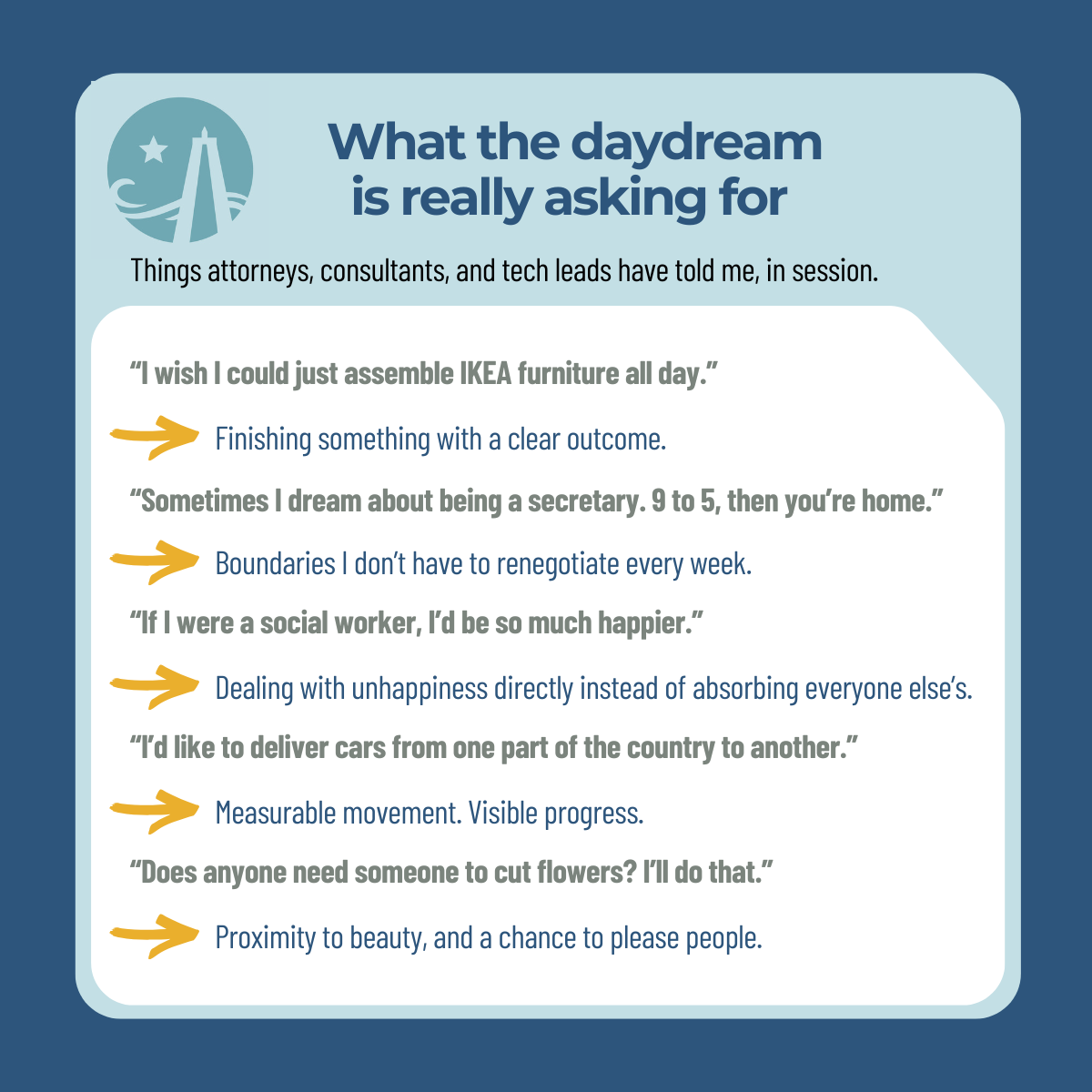
I’ve been talking to people about boundaries lately.
My point of view about workload is that if you have work that is complex, and you are a conscientious person with high standards, your workload is essentially infinite. There’s always just a little more to be done before you’ll really feel “on top of things.” You’ll always end a workday leaving things undone; that’s a condition that will never end. The thing we control is which things we leave undone, and what we do with the nagging realization that we haven’t done all we could. Will that corrode us and keep us from enjoying the other things in our life, or not? Although our colleagues and their expectations have influence on how we negotiate how much we get done and how we feel about it, that is not up to them. It’s up to us.
It’s similar to how we feel about wealth (and status, and maybe love). We’re all built to want just a little bit more than we have. I have a memory of reading a study, the details of which are now lost to me, that suggests a universal belief that if we just had 15% more money, we’d finally be comfortable financially. Of course this myth follows us up the earnings curve, never to be satisfied. Respite doesn’t come from earning more but from a disciplined approach to tuning out that inner insistence.
I’ve been influenced by Cal Newport’s ways of thinking about workload in the context of worthwhile accomplishments and a life worth living, and Timothy Miller’s suggestions for combating the relentless desire we have for MORE. The most important premise I’ve taken from them both is the recognition that we get to decide how eaten up we are by thoughts about what we SHOULD have or SHOULD be. Maybe you know someone who’s thinking about boundaries who might benefit from one of these books.