My clients are very good at solving problems. I marvel at their brainpower. They’re also self-aware and self-reflective. Sometimes I have to look up words they use. And I’m no dummy.
So why do they need help? Why are you unhappy at work?
I think there are a few reasons.
The first is set out in this wonderful blog post by Adam Mastroanni. He notes that there are two kinds of problems. School and intelligence tests measure well-defined problems, and those problems have clear boundaries, repeatable processes, and stable relationships between the variables. Things like “being happy at work” or “finding a romantic partner” or figuring out where to live or how much time to spend with your friends or what role you want to play in your community — those are poorly-defined problems. You can’t really even know whether you’ve solved them.
People who’ve been rewarded for being good at solving well-defined problems can be paralyzed by poorly-defined problems.
It can feel really disconcerting, too! You know that you can do hard things. You’ve been rewarded for your work ethic and your brain power. You’re REALLY EFFECTIVE. But this problem you have, not only can you not solve it, you’re acting like someone you don’t recognize…. you’re procrastinating, hesitating, or working in random bursts. Have you changed? Maybe you’re not as effective as you thought you were. Maybe you’re actually trapped.
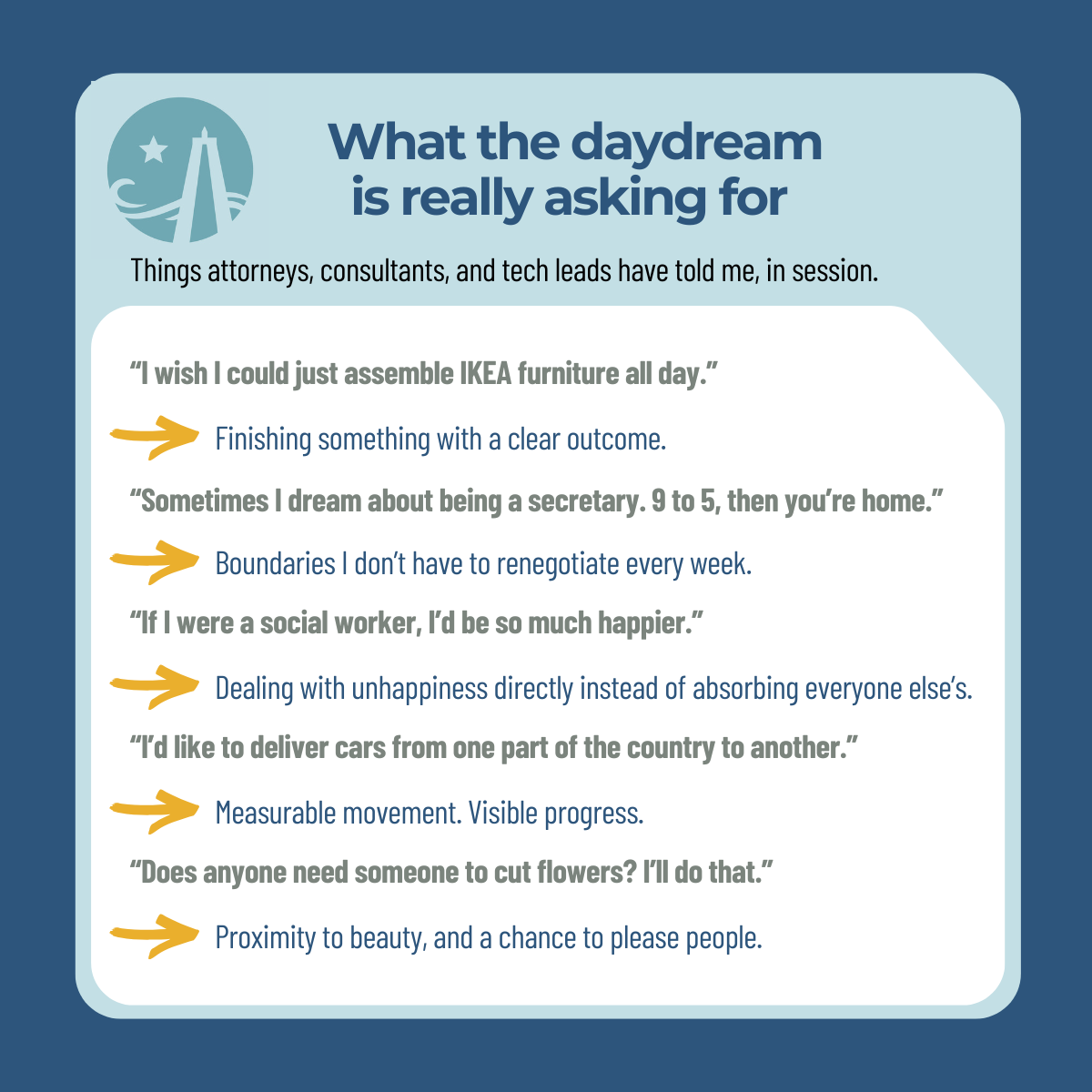
One of the things I do as a coach is take a vague dissatisfaction with work — or even a more lively, active intention to leave — and turn it into a series of actions. Through structured homework assignments and review, we identify and personalize an action plan that’s aligned with each client’s priorities. It can be counter-intuitive, because it doesn’t look like sending applications or drafting cover letters or bullet points. But there are clear steps along the path and I love showing them to people.
The other reason that smart people benefit from help is that we can’t see ourselves as clearly as others can. You can’t give yourself a haircut. You can’t read the label from inside the jar.
My job is to hold a mirror up for clients and show them some things they can’t see about themselves. We all feel “normal” to ourselves — but the ways in which we are distinct and unusual are sometimes harder to know and articulate. I look closely at people, and can give you a view of yourself that you can’t get alone.
If you’re ready to learn more, subscribe to my newsletter and I’ll share my best frameworks with you.