Burnout is a topic that shows up with some regularity, because my clients are ambitious, and many work in high skill, high intensity environments with demanding colleagues and clients. Setting boundaries is tough for everyone, but it can be particularly hard in these circumstances.
Most of the literature on burnout recognizes that the most salient and long-lasting solutions need to happen at the organizational level rather than the individual decision level. If your work environment is burning you out, there are limited ways you can adjust your own boundaries and approach. No amount of mindfulness or yoga will counter unrealistic workload expectations, a lack of control over work conditions or hours, compensation incentives, or unreasonable administrative burdens.
It can be validating just to recognize that.
I recently dove into the literature around physician burnout. The Mayo Clinic has been doing thoughtful research on the topic for a number of years. Here’s a graphic showing the drivers of burnout in physicians, and assigning responsibility for those factors to individuals, work units/teams, organizations, and national factors:
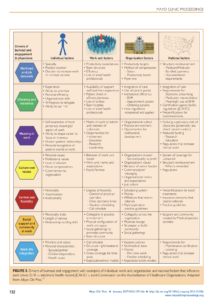
A graphic like this helps. It recognizes both the levers and the limitations that an individual has — which can help fight against despair, on one hand, and can identify where energy might be recovered and where efforts at advocacy might be aimed.
Because I coach high-performing individuals, we focus our strategy and action planning sessions almost entirely on the individual factors, with an eye on the work unit and organization factors where there is social capital and influence sufficient to nudge changes.
So this paragraph stood out to me:
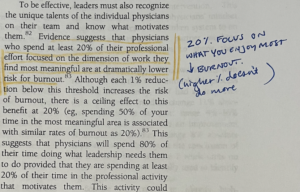
“Evidence suggests that physicians who spend at least 20% of their professional effort focused on the dimension of work they find most meaningful are at dramatically lower risk for burnout….This suggests that physicians will spend 80% of their time doing what leadership needs them to do provided that they are spending at least 20% of their time in the professional activity that motivates them.”
What a compelling sentence. It suggests that “dramatically lower risk for burnout” can come from job crafting — turning the knob on the activities you devote your working time to, so that you hit that 20% threshhold.
But the article points out that few leaders know enough about the motivators of their team to facilitate professional development or assign projects accordingly… and goes on to say, “Furthermore, we find that few physicians can articulate in a granular way which professional activity is most meaningful to them when first asked.”
In my experience, physicians are typical of highly-skilled and ambitious professionals. Lawyers, consultants, project managers, and data scientists aren’t usually able to articulate where they find meaning in their career until we’ve spent some time on the question. The ability to succeed through action, and the habit of reflection on values and motivators, are different activities. It’s why I move clients through a structured set of activities — the values cards, the work biography, and a number of other exercises — to help them unearth the most meaningful activities, superpowers, and growth areas. (We also help them recognize the activities that are most draining or frustrating.)